

Local SEO has a consistency problem. It’s not that business owners don’t understand what they should be doing — posting regularly to Google Business Profile, monitoring their local rankings, keeping listing data accurate across the web. The problem is that these tasks are repetitive, easy to deprioritize, and quietly compound when they’re neglected. Local SEO automation tools exist to handle the repetitive parts so the consistency gap stops being a competitive disadvantage.
Whether your business actually needs one depends on your volume, your bandwidth, and how competitive your local market is. Here’s how to make that call clearly.
What Local SEO Automation Tools Actually Do
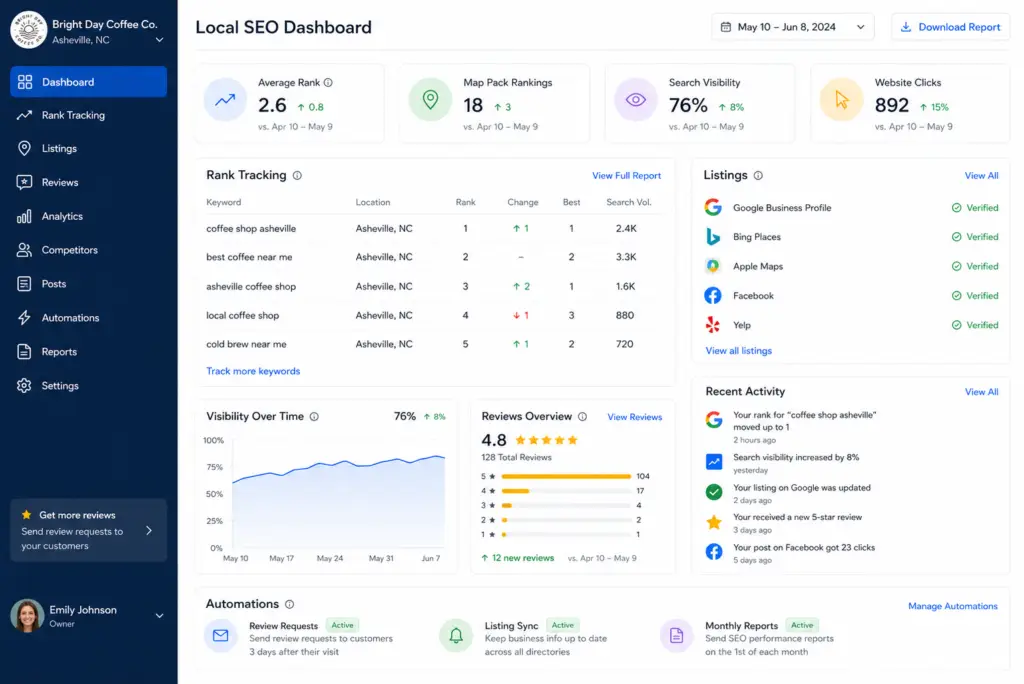
‘Automation’ is a broad word, and in the local SEO context it covers several distinct categories of work:
Listing management
Your business name, address, and phone number (NAP) needs to be consistent across dozens of directories — Google, Bing, Apple Maps, Yelp, and industry-specific platforms. Automation tools push updates across all of them simultaneously so a change in hours or a new address doesn’t require manually logging into twenty different platforms.
Google Posts scheduling
Regular posts to your Google Business Profile improve engagement signals. Automation tools let you draft and schedule posts in batches rather than logging in manually every week.
Rank tracking
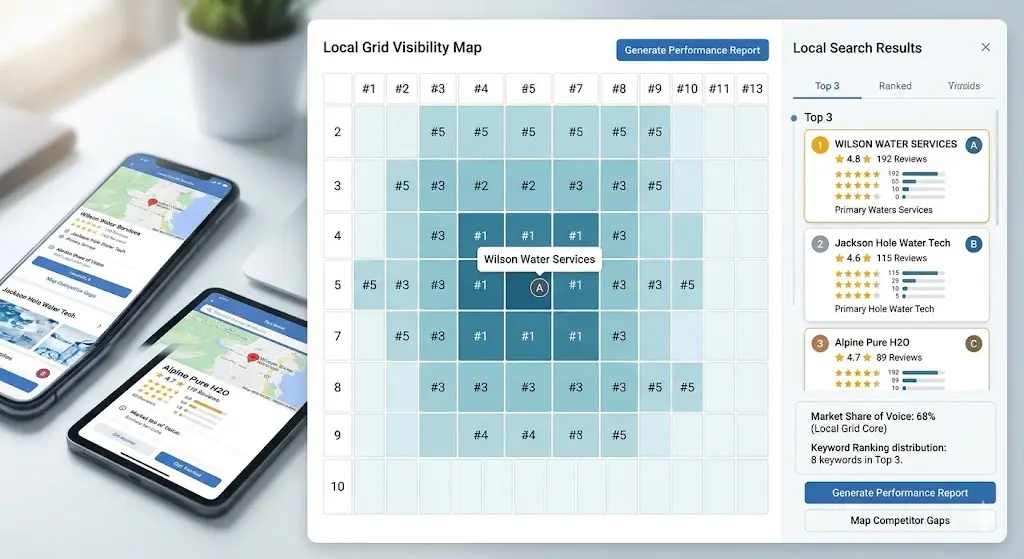
Local rankings aren’t static — they shift by neighborhood, by device, by time of day. Automation tools track these changes and surface the ones worth paying attention to rather than requiring you to run manual searches to check your own position.
Review monitoring
Automated alerts when new reviews come in mean you’re not checking the dashboard daily on the chance someone left feedback. Pair this with AI review response tools and you have a complete reputation loop.
The Real Value: Preventing Drift
The biggest argument for local SEO automation tools isn’t efficiency — it’s protection against drift. Without automation, listings gradually fall out of sync. Hours change and don’t get updated everywhere. A new phone number gets pushed to Google but not to Apple Maps or the dozen data aggregators feeding smaller directories. A competitor claims a listing you didn’t know existed on a platform you’d never checked.
None of these issues are catastrophic individually. Together, over time, they erode local visibility in ways that are genuinely hard to diagnose without automation pulling all the data into one view.
Who Actually Needs Automation — and Who Doesn’t
The honest answer is that not every small business needs a dedicated local SEO automation platform right now.
- You probably don’t need one yet if: You’re a single-location business in a low-competition market, your listing data is already consistent and accurate, your review volume is manageable manually, and you’re already posting to GBP at least twice a month.
- You probably do need one if: You have multiple locations, your NAP data has drifted across directories, you’re in a competitive local market where your top competitors are clearly more active on their profiles, or you’ve been neglecting GBP posting for months.
For the multi-location case especially, trying to manage local SEO manually across five or ten locations is where consistency falls apart fastest. Automation isn’t a shortcut — it’s just the only way to maintain the same standard across every location simultaneously.
Where Automation Fits in a Complete Strategy
Automation handles consistency and monitoring well. It doesn’t replace strategy. A tool that publishes your GBP posts on schedule can’t tell you what to say in those posts, or identify that you’re losing rankings because a competitor just launched a review acquisition campaign, or flag that your primary category is wrong for the way customers actually search for you.
For the strategy layer, see our breakdown of the platforms that combine automation with AI-driven recommendations:
7 Best AI Tools for Google Business Profile Optimization in 2026
AI Business Listing Optimization: Best Practices for 2026
AI Review Response Tools: How Small Businesses Can Automate Reputation Management
If you want an outside team to run local SEO strategy and execution rather than managing it yourself, Scalar Advertising’s SEO services are built specifically around helping local businesses compete with larger brands — without the enterprise price tag.