
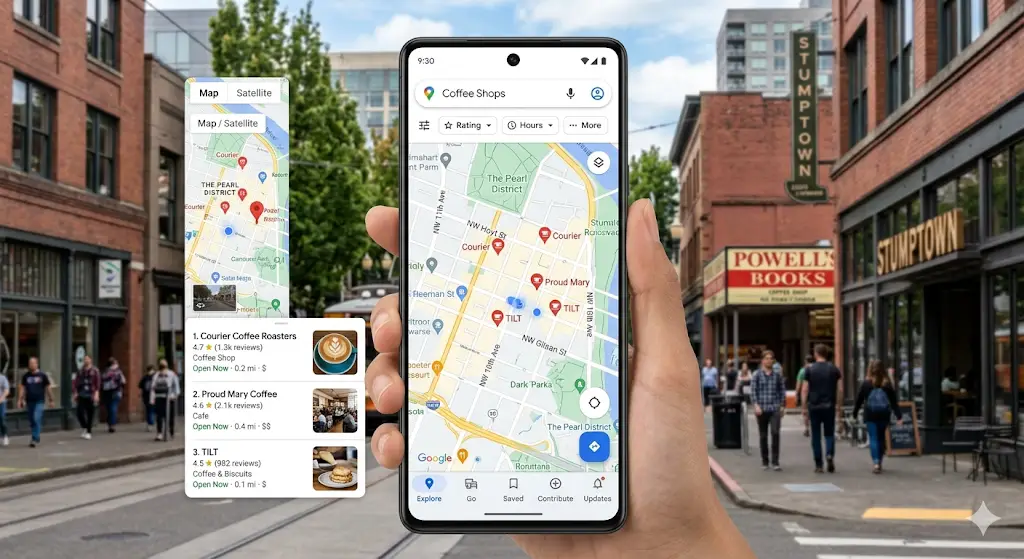
If you run a local business, your Google Business Profile is doing more selling than your website. It is the first thing a customer sees before they call, visit, or scroll past you for a competitor. And in 2026, the businesses winning that moment are not necessarily the ones with the biggest marketing budgets — they are the ones using AI tools for Google Business Profile optimization to stay consistent, respond faster, and show up more often in local search.
Manually managing a Google Business Profile (GBP) used to mean logging in once a quarter to update your hours and hoping reviews took care of themselves. That approach does not hold up anymore. Google’s local algorithm rewards activity: fresh posts, fast review responses, accurate categories, and complete listings. Neglect any of those signals and a competitor who is actively managing their profile will outrank you, even if your business has been operating longer and has better reviews.
AI tools for Google Business Profile optimization exist specifically to close that gap. They automate the repetitive parts of GBP management so business owners can focus on running the business instead of babysitting a dashboard. This guide breaks down the seven best platforms available right now, what each one actually does well, how to use AI without running into Google’s guidelines, and how to figure out which tool fits your specific situation — whether you are a solo operator or managing fifty locations.
AI Business Listing Optimization: Best Practices for 2026
Why Your Google Business Profile Matters More Than Ever in 2026
Google’s local search landscape has shifted significantly over the past two years. With AI-generated overviews appearing above organic results and zero-click searches becoming the norm, the local map pack — those three business listings that appear with a map at the top of a local search result — has become the most valuable real estate in local SEO.
Research consistently shows that the majority of clicks on local search results go to one of those three map pack positions. If your business is not in the top three, most people searching for what you offer in your area will never see you. The factors Google uses to rank businesses in that map pack include relevance (how well your profile matches the search), distance, and prominence — and all three are influenced by how actively and accurately you manage your GBP.
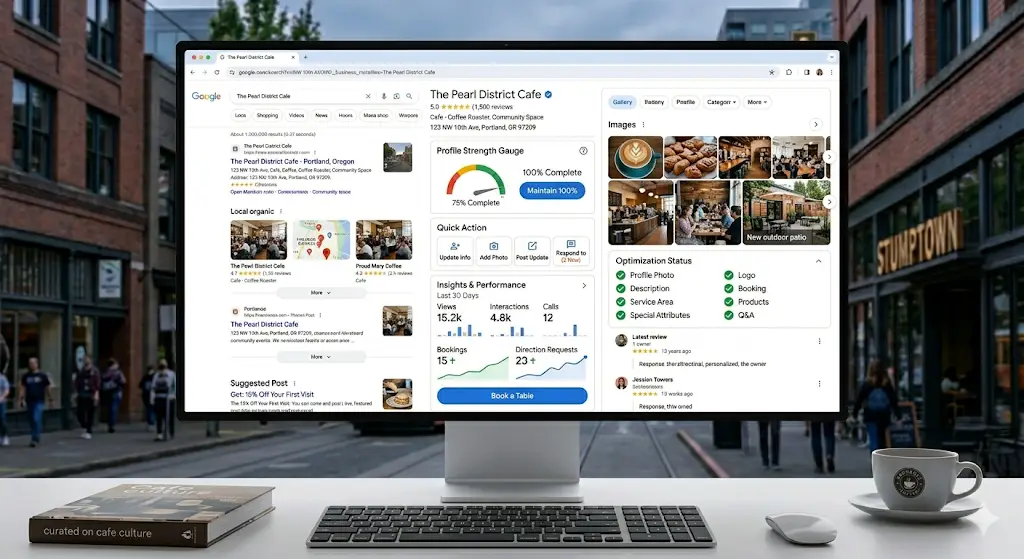
This is where AI tools for Google Business Profile optimization make a measurable difference. Businesses that post regularly, respond to reviews quickly, keep their information accurate, and maintain complete profiles are the ones that show up in those top three positions. AI tools make it possible to do all of that consistently without it becoming a full-time job.
What Makes a Good AI Tool for GBP Optimization?
Not every ‘AI-powered’ local SEO tool is built the same way, and the label gets thrown around loosely. Before comparing specific platforms, it helps to know what separates a genuinely useful tool from a glorified scheduling app with a chatbot bolted on.
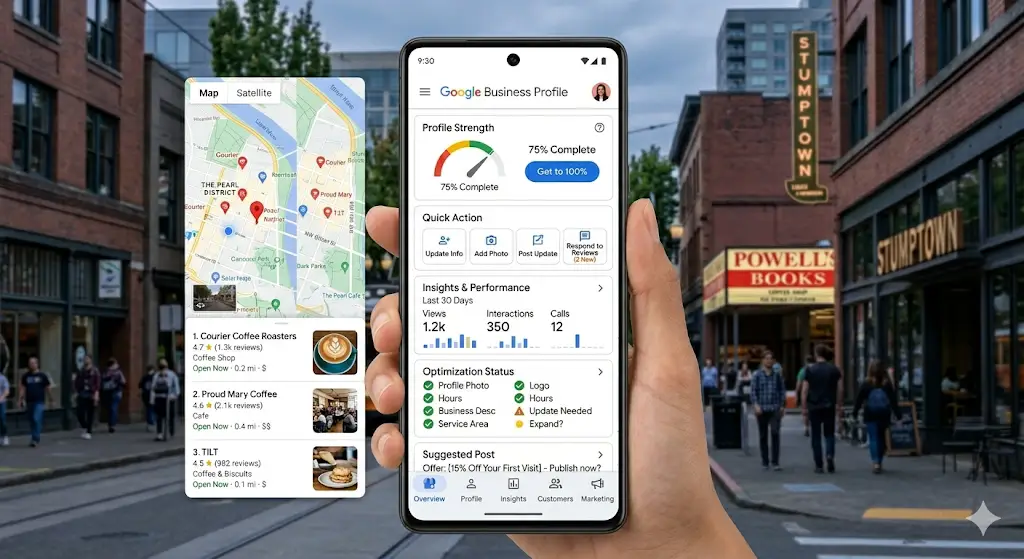
The strongest AI tools for Google Business Profile optimization tend to share six characteristics:
- Review management. The tool should be able to draft, suggest, or auto-respond to customer reviews in a tone that matches your brand — not generic, copy-paste language that reads as obviously automated.
- Post creation. Google Posts (offers, updates, events) influence engagement signals. A good tool helps you generate and schedule these without starting from a blank page every week.
- Local SEO features. This includes citation consistency, category optimization, keyword suggestions for your business description, and competitor benchmarking specific to your service area.
- Reporting. You need visibility into what is actually moving — search visibility, call clicks, direction requests — not just vanity metrics.
- Automation. The best platforms reduce manual work without removing your control over what gets published in your business’s name.
- Ease of use. If the tool requires a learning curve steeper than just doing the work manually, it defeats the purpose.
With that framework in mind, here are the seven platforms worth your attention.
Local SEO Automation Tools: What They Do and Whether Your Business Needs One
1. ChatGPT
ChatGPT is not a dedicated local SEO platform, but it has become one of the most widely used AI tools for Google Business Profile optimization because of its flexibility and zero learning curve. It does not connect directly to your GBP dashboard — you are still copying and pasting — but for businesses that want AI assistance without paying for another subscription, it covers a surprising amount of ground.
Best use cases
- Review responses. Paste in a customer review and ask for three response options in different tones — apologetic, appreciative, or matter-of-fact. You pick the one that fits.
- Google Posts. Generate short, keyword-aware post copy for promotions, seasonal updates, or new service announcements in seconds.
- Business descriptions. Draft and refine your GBP business description so it reads naturally while working in relevant local keywords.
- FAQ creation. Build out a bank of frequently asked questions and answers to add to your profile, addressing the things customers actually ask before booking or visiting.
Pricing
ChatGPT is free at the basic tier. ChatGPT Plus costs $20 per month and gives access to GPT-4o with faster response times and more sophisticated output — worth it if you are using it daily for content generation.
The tradeoff
ChatGPT generates the content; you still have to log into Google Business Profile and publish it yourself. For a solo business owner on a tight budget, that is a reasonable tradeoff. For anyone managing multiple locations or needing direct GBP integration, it becomes a bottleneck fast.
2. BrightLocal
BrightLocal has been a staple in the local SEO world for years, and its AI features have matured into one of the more complete packages on this list. It combines rank tracking, citation building, and review monitoring with AI-assisted response suggestions, all built specifically around how Google ranks local businesses.
Best use cases
- Local rank tracking. See exactly where your business ranks in the local map pack for specific keywords, in specific neighborhoods, compared to specific competitors.
- Citation auditing and building. Find and fix inconsistent business listings across hundreds of directories — one of the most underrated factors in local SEO.
- Review management. Monitor and respond to reviews across Google, Facebook, and other platforms from a single dashboard with AI-suggested response drafts.
Pricing
BrightLocal plans start at $39 per month for the Track plan, with agency plans running higher depending on the number of locations managed. A 14-day free trial is available.
Who it is best for
BrightLocal is particularly strong for agencies and multi-location businesses that want depth of data rather than surface-level reporting. If you want to understand why your visibility is changing — not just see that it changed — BrightLocal gives you that level of diagnostic detail.
3. Semrush Local
Semrush Local extends the broader Semrush platform into local search management, which matters if you are already using Semrush for content or competitor research. Its AI features focus heavily on listing accuracy across the web — making sure your business name, address, and phone number match everywhere they appear, since inconsistencies quietly hurt local rankings.
Best use cases
- Listing management at scale. Push NAP updates across major directories and data aggregators from a single dashboard without logging into each platform individually.
- Profile completeness scoring. AI-generated suggestions flag missing attributes, outdated categories, or weak descriptions compared to top-ranking competitors in your area.
- Competitor benchmarking. Analyze what your highest-ranking local competitors are doing differently with their profiles and use those insights to close the gap.
Pricing
Semrush Local is an add-on to existing Semrush subscriptions, starting at around $20 per month per location on top of the base Semrush plan. For businesses already paying for Semrush, this is a cost-efficient way to add local capability without a separate platform.
Who it is best for
Businesses already inside the Semrush ecosystem. If you are not using Semrush for anything else, starting here means paying for platform access you may not fully utilize. If you are, Semrush Local is one of the more efficient AI tools for Google Business Profile optimization precisely because everything lives in one place.
4. Localo
Localo is purpose-built for Google Business Profile specifically, rather than treating GBP as one feature among many. That focus shows throughout the product. Its AI suggests content for Google Posts based on what is actually working for similar businesses in your category, tracks local pack ranking fluctuations daily, and includes a GBP grader that scores your profile against optimization best practices with specific, actionable recommendations.
Best use cases
- GBP-specific optimization. Localo’s recommendations are narrowly focused on what moves GBP rankings specifically — not generic SEO advice dressed up as local SEO.
- Daily rank monitoring. Track how your local map pack position shifts over time, broken down by keyword and location, so you catch drops early.
- Post content suggestions. AI generates Google Post ideas based on your business category and what is performing well for competitors, reducing the blank-page problem significantly.
Pricing
Localo offers a free tier with limited features. Paid plans start at around $24 per month per location, making it one of the more affordable dedicated GBP tools on this list.
Who it is best for
Small and mid-sized businesses that want a tool dedicated entirely to GBP without paying for a bloated suite of features they will never touch. The narrower scope is the point — Localo does fewer things than BrightLocal or Semrush Local, but what it does, it does well.
5. Yext
Yext operates at a different scale than most tools on this list. It is built for multi-location brands and franchises that need to manage hundreds or thousands of listings consistently across Google, Bing, Apple Maps, Yelp, and dozens of other platforms simultaneously. Its AI features extend into ‘answers’ technology — structured data that helps your business show up correctly when customers ask AI-powered search tools or voice assistants questions about your hours, services, or location.
Best use cases
- Enterprise listing management. Push updates to all locations and all platforms simultaneously, with confidence that no listings drift out of sync.
- AI answers and structured data. Ensure your business information is formatted correctly for AI-powered search experiences, voice search, and emerging discovery surfaces beyond traditional search.
- Franchise and brand compliance. Enforce consistent branding, categories, and descriptions across all locations without relying on individual location managers to get it right.
Pricing
Yext pricing is custom and enterprise-level — typically starting in the hundreds of dollars per month per location or negotiated as an annual enterprise contract. It is not built for small businesses and is not priced like one.
Who it is best for
Regional and national brands managing GBP at genuine scale. For a single-location small business, Yext is almost certainly overkill in both cost and complexity. For a brand with 50+ locations, it is one of the few platforms built to handle that volume without listings drifting out of sync over time.
6. Birdeye
Birdeye leans hardest into reputation management of any tool on this list. Its AI review response engine is genuinely strong — it analyzes review sentiment, suggests personalized responses tailored to the specific content of each review, and can flag negative reviews for priority handling before they sit unanswered for days. Beyond reviews, it includes GBP listing management, social post scheduling, and customer survey tools, positioning itself as a broader customer experience platform rather than a narrow SEO tool.
Best use cases
- High-volume review management. For businesses receiving dozens of reviews per week, Birdeye’s automation keeps response times fast without requiring a dedicated person to monitor the inbox.
- Sentiment analysis and reputation monitoring. Track how customer sentiment is trending over time across all review platforms, not just Google.
- Automated review requests. Send post-visit review request messages via text or email to increase review volume from satisfied customers.
Pricing
Birdeye pricing is not publicly listed and varies by business size and features. Expect to pay $300 or more per month for a full-featured plan — this is positioned as a premium solution, and the pricing reflects that.
Who it is best for
Multi-location businesses and franchises where reputation is a top priority and review volume is genuinely too high to manage manually. If review response time is slipping and it is hurting your ratings, Birdeye is built directly for that problem.
7. Synup
Synup rounds out the list as a listing management platform with a strong AI layer for review responses and local search reporting. It is comparable to Yext in that it is designed for multi-location listing consistency, but it is generally positioned as a more accessible, mid-market alternative — less enterprise overhead, still solid coverage across major directories with AI-assisted reputation tools layered on top.
Best use cases
- Multi-location listing management. Manage NAP consistency and profile updates across all locations from one dashboard, with per-location performance breakdowns.
- Review monitoring and response. AI-drafted review responses with approval workflows so nothing publishes without a human sign-off.
- Local search reporting. Track visibility, impressions, and customer actions by individual location so you can identify exactly which locations are underperforming and why.
Pricing
Synup pricing starts at around $30 per month per location and scales with the number of locations managed. Custom pricing is available for agencies and larger brands.
Who it is best for
Franchise owners, regional chains, and agencies managing multiple business locations who need Yext-level listing control at a more mid-market price point.
AI Review Response Tools: How Small Businesses Can Automate Reputation Management
How to Use AI Without Violating Google’s Guidelines
AI tools for Google Business Profile optimization can speed up your work significantly, but speed is not an excuse to cut corners. Google has been explicit that automation itself is not the problem — low-quality, deceptive, or fake content is. A few rules are worth following regardless of which tool you use:
- Avoid fake reviews. No AI tool should be used to generate reviews, incentivize reviews in exchange for discounts, or post reviews from accounts that are not real customers. This is one of the fastest ways to get a profile suspended.
- Keep human oversight in the loop. AI-drafted review responses, posts, and descriptions should always be reviewed by a real person before publishing. AI does not know your business’s specific policies, recent issues, or tone the way you do.
- Prioritize content quality over content volume. Posting more often is not automatically better if the content is generic or repetitive. Google’s systems are increasingly good at identifying low-effort, templated content published at scale.
- Verify accuracy before publishing. AI can confidently generate incorrect information — wrong hours, outdated services, inaccurate claims. Every AI-generated update should be fact-checked against what is actually true about your business before it goes live.
- Do not automate review solicitation deceptively. Sending review request messages to customers after a genuine transaction is acceptable. Sending them to non-customers, employees, or people who have not interacted with your business is a policy violation that can result in profile removal.
Used correctly, AI becomes a drafting assistant, not an autopilot. That distinction is what keeps your profile both efficient and compliant.
Which AI Tool Is Best for Your Business?
There is no single best answer — the right choice depends on your size, budget, and how much of this work you want to hand off entirely.
- Solo business owner: Start with ChatGPT for drafting content, or Localo if you want a dedicated GBP tool with built-in tracking. Either keeps cost low while still saving real time on reviews and posts.
- Multi-location company: BrightLocal or Synup offer the reporting depth needed to manage several locations without losing visibility into which ones need attention. Both balance feature depth with reasonable cost for a growing operation.
- Agency: Semrush Local fits naturally if you are already managing client SEO work inside Semrush. BrightLocal is also a strong agency pick thanks to its white-label reporting options and per-client dashboards.
- Enterprise: Yext and Birdeye are built for scale — hundreds of locations, structured data across multiple platforms, and reputation management that can keep up with high review volume across an entire brand footprint.
Final Thoughts: Start With One Tool, Not All Seven
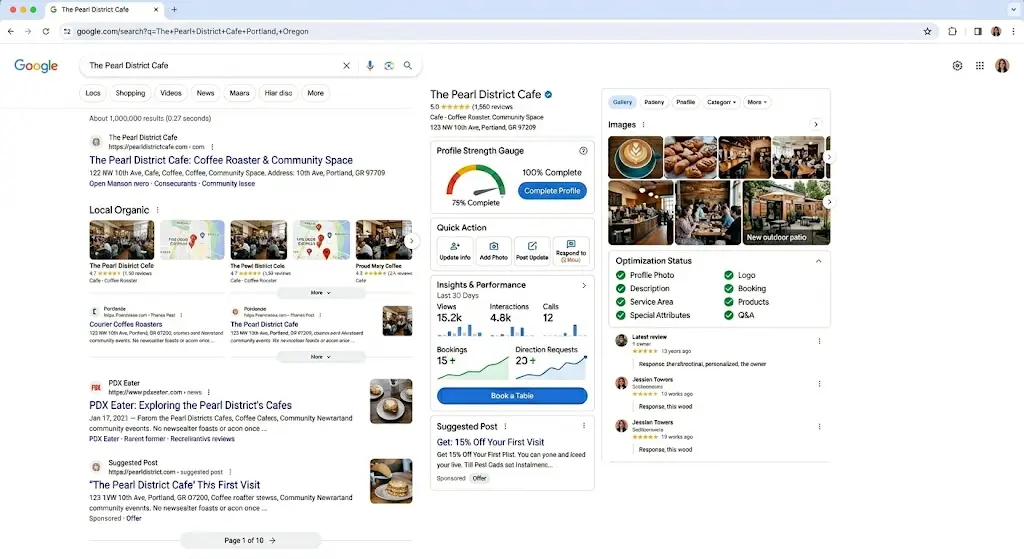
You do not need to evaluate every platform on this list before making progress. The businesses that get the most out of AI tools for Google Business Profile optimization are not the ones running five platforms simultaneously — they are the ones that identified their biggest bottleneck, picked a tool that directly addresses it, and used it consistently.
If review responses are piling up unanswered, start there. If your listing data is a mess across directories, fix that first. If you have no idea where you actually rank for your most important local keywords, rank tracking is the right entry point. Solve one problem well before adding another tool to the stack.
What matters most in local SEO is not sophistication — it is consistency. A business that posts to GBP twice a month, responds to every review within 24 hours, and keeps its listing data clean will outperform a business with a more complex tech stack but no one reliably executing the basics.
If you would rather have a team handle GBP optimization, review management, and the rest of your local search strategy directly, Scalar Advertising builds data-driven local SEO strategies for small businesses that want to show up first — without managing five different software subscriptions to get there.
Ready to start leveling up your business? Give SCALAR a call today.