
SCALAR Advertising | 8 min read | Strategy & Growth

The Problem
Ever though your digital marketing strategy wasn’t enough? Here’s a number that should stop every small business owner in their tracks: 61% of marketers say generating traffic and leads is their single biggest challenge. If that sounds familiar, you’re not alone and the problem usually isn’t your product, your pricing, or even your effort. The problem is the absence of a coherent plan.
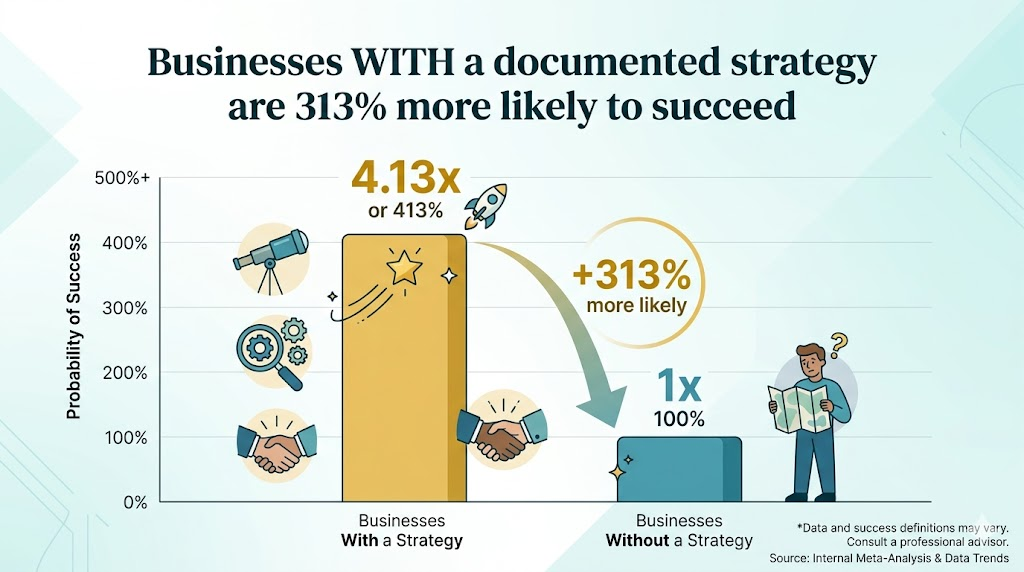
A well-built digital marketing strategy for small businesses is not a luxury reserved for companies with large budgets and dedicated marketing departments. It’s the difference between guessing and growing. It’s the documented roadmap that tells you who you’re talking to, where to find them, what to say, and how to measure whether it’s working.
In this post, you’ll get a clear-eyed look at why digital marketing matters more than ever for small businesses, and a practical 5-step framework to build a strategy you can actually execute — starting today.
Get your Free marketing Audit. →
Why Most Small Businesses Struggle Online (And What They’re Missing)
There are 33.2 million small businesses in the United States, according to the U.S. Small Business Administration. That’s 33.2 million businesses competing for visibility — and the vast majority of them are doing so without a documented strategy.
Most small business owners don’t lack hustle. They post on social media when they have time, run a Google ad here and there, maybe send an email newsletter once a quarter. But sporadic activity is not a strategy. It’s noise. And in a crowded digital landscape, noise gets ignored.What separates the businesses that grow consistently from the ones that plateau is this: they treat their digital marketing strategy for small businesses the same way they treat their finances — as something that requires regular attention, clear goals, and measurable outcomes.
Why Digital Marketing Isn’t Working And What to Fix First
Step 1 — Define Your Goals and Know What Success Looks Like
Every effective digital marketing strategy starts with clarity. Before you choose a platform, write a piece of content, or spend a dollar on ads, you need to answer one question: what does winning look like for your business over the next 90 days?
Vague goals produce vague results. Instead of “get more customers,” try:
- Generate 50 qualified leads per month through the website
- Grow email subscribers from 400 to 1,000 by Q4
- Increase Google Maps ranking to the top 3 results for our primary service keyword
Specific, measurable goals create accountability. They also make it much easier to evaluate which marketing activities are worth your time and money — and which ones aren’t.
Key Metrics to Track
- Website traffic (organic, paid, social, direct)
- Lead conversion rate
- Cost per lead (CPL)
- Customer acquisition cost (CAC)
- Email open and click-through rates
- Return on ad spend (ROAS)
Step 2 — Know Your Audience Better Than They Know Themselves
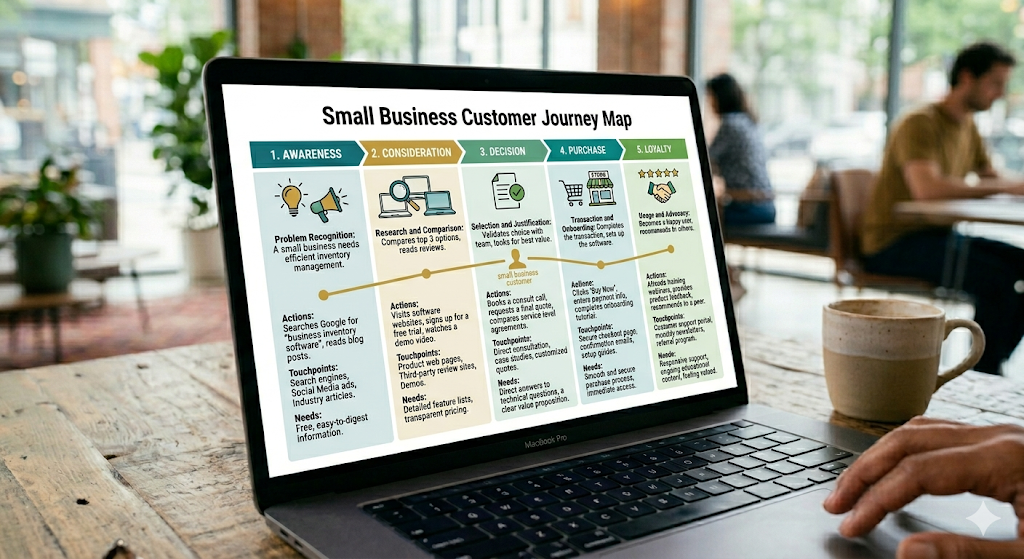
The most common mistake is trying to speak to everyone. When you speak to everyone, you resonate with no one. A strong digital marketing strategy for small businesses is built on a precise understanding of a specific audience.
This goes deeper than basic demographics. Yes, you need to know your customer’s age range, location, and job title. But the businesses that connect — the ones whose content gets shared, whose ads get clicked, whose emails get opened — know their audience’s frustrations, aspirations, and objections at a granular level.
Ask yourself:
- What keeps my ideal customer up at night?
- What have they already tried that didn’t work?
- What does success look like for them — in their words, not yours?
- Where do they spend time online, and who do they trust?
Step 3 — Choose Your Channels Strategically (Not Randomly)
Social media, SEO, email marketing, paid ads, content marketing, local search — there is no shortage of digital marketing channels. The mistake most small businesses make is spreading themselves across all of them at once, doing everything poorly instead of a few things brilliantly.
The right channels for your business depend on where your audience actually spends their time and what stage of awareness they’re at when they find you. Here’s a quick breakdown:
Local SEO & Google Business Profile
If you serve a local market, your Google Business Profile is arguably your single most valuable digital asset. According to BrightLocal’s 2024 Local Consumer Review Survey, 98% of consumers used the internet to find information about local businesses. Showing up in Google’s local pack — the map results that appear for searches like “plumber near me” or “best accountant in [city]” — is non-negotiable for any serious digital marketing strategy for small businesses focused on local growth.
Content Marketing & SEO
Long-form blog content that targets the questions your ideal customers are already searching drives compounding, free traffic over time. Unlike paid ads that stop the moment your budget runs out, a well-optimized blog post can generate leads for years.
Email Marketing
Email delivers an average ROI of $36 for every $1 spent, making it the highest-ROI channel in digital marketing (Litmus, 2023). Building an owned email list is one of the most resilient marketing assets a small business can have — it’s immune to algorithm changes and platform shutdowns.
Paid Advertising (PPC & Social Ads)
Paid channels are best used to accelerate growth once you have clarity on your audience and offer. A Facebook or Google ad campaign pointed at a vague message to a poorly defined audience is a fast way to burn money. Point that same spend at a proven message for a well-researched audience, and the math changes dramatically.
Step 4 — Create Content That Earns Trust Before It Asks for a Sale
The internet is saturated with promotional content. Consumers have become exceptionally skilled at filtering it out. According to the Nielsen Consumer Trust Index, 92% of people trust earned media — things like organic content, reviews, and peer recommendations — over any form of paid advertising.
This is one of the most important insights that shapes a truly effective digital marketing strategy for small businesses: your content should educate, inform, or entertain before it ever tries to sell. The goal is to become the most trusted voice in your niche — the business your customers think of first when they’re ready to buy.
What does that look like in practice?
- Blog posts that answer the exact questions your customers are Googling
- Short-form video content showing behind-the-scenes, how-to guides, or customer stories
- Case studies and testimonials that build social proof
- Email sequences that deliver consistent value before any promotional message
- Free resources (checklists, calculators, guides) that solve a real problem
Step 5 — Measure, Optimize, and Don’t Stop
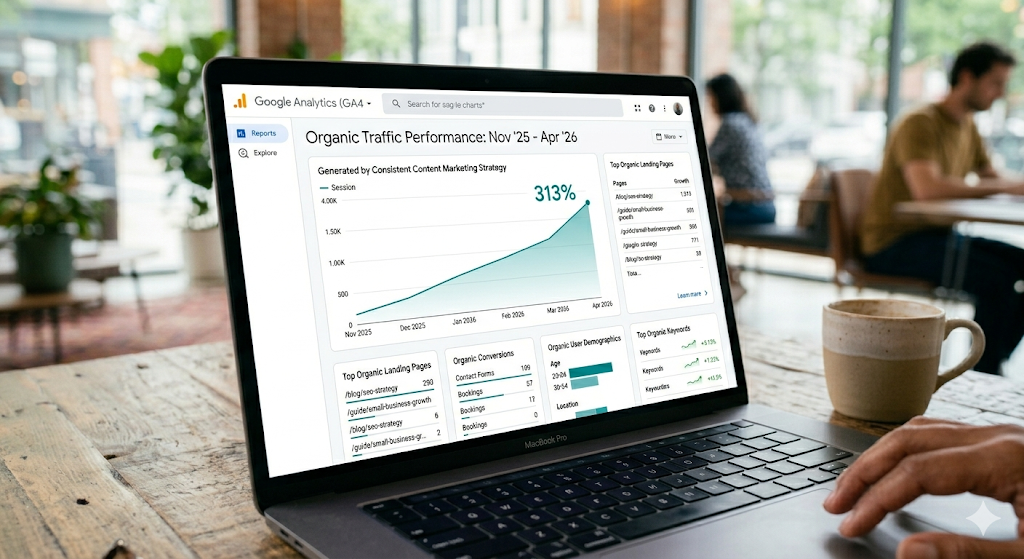
The final — and most underrated — element of a winning digital marketing strategy for small businesses is consistency paired with iteration. Most businesses either don’t track results at all, or they track vanity metrics (likes, followers, impressions) that feel good but don’t pay the bills.
What you should be tracking is the relationship between your marketing activity and real business outcomes: leads generated, calls booked, products sold, and revenue earned.
A simple monthly marketing review should cover:
- What content or campaigns drove the most traffic and leads this month?
- What was our cost per lead compared to last month?
- Which channel delivered the best quality leads (not just the most leads)?
- What should we double down on, and what should we cut?
Marketing without measurement is just spending. Marketing with consistent measurement and optimization is investing.
Local SEO for Utah Businesses: How to Rank Higher and Get More Customers
The Competitive Edge Small Businesses Actually Have
Here’s something the big brands can’t replicate: authenticity, speed, and genuine community connection. A local restaurant, a boutique fitness studio, a regional law firm these businesses can build real relationships with their customers in ways that national chains never can.
The businesses that are winning with digital marketing right now are not outspending their competitors. They’re out-thinking them, publishing content that actually helps people, responding to comments and reviews within hours. They’re showing up consistently in local search, in inboxes, and in feeds not with polished ads that feel corporate, but with honest, helpful content that feels human.
According to Forbes, businesses that invest in digital marketing see an average ROI of 122% — more than four times higher than traditional outbound marketing. A smart digital marketing strategy doesn’t require a massive budget. It requires clarity, consistency, and a genuine commitment to serving your audience.
Need More insight? check out this article! Why Most Small Business Fail at Marketing
Conclusion
You don’t need to be everywhere, don’t need to outspend anyone and don’t need to go viral.
What you need is a plan — a clear, documented, audience-focused digital marketing strategy for small businesses that tells you what to do, where to do it, and how to know if it’s working. The five steps in this guide give you exactly that foundation: define your goals, understand your audience, choose your channels, create trust-building content, and measure relentlessly.
Digital marketing is not a sprint. The businesses that win are the ones that show up consistently, learn from their data, and keep getting better. Start there. Start now.